











Vincent C, Bodnaruc AM, Prud'homme D, Olson V, Giroux I. Associations between menopause and body image: a systematic review. Women's Health, 2023. https://journals.sagepub.com/doi/10.1177/17455057231209536
Key takeaways
- Research confirms that feelings of unattractiveness during menopause are associated with mood, memory, and sexual relationship quality, not with age or BMI. Treating the hormonal picture addresses the actual drivers.
- The physical changes to skin, hair, and body composition all have specific hormonal mechanisms. Understanding them makes them less distressing and points toward what can genuinely help.
- Effective options exist for every dimension of this experience, from HRT and testosterone to vaginal oestrogen and CBT, and they work best when addressed together.

You are not imagining it, and it is not just you
A systematic review of 18 studies published in Women's Health (2023) found that in all six studies specifically investigating the relationship between menopause symptoms and body image, higher symptom frequency and intensity were consistently associated with greater body image concern. This is a consistent, well-documented pattern, not a personal failing or a sign that you are unusually vain or fragile.
What you are experiencing is a physiological disruption to multiple systems that govern how you look and, more importantly, how you feel. The two are connected in ways that most content on this topic does not adequately explain.
A qualitative study published in Women's Health (2025) captured it well: women in midlife described a mismatch between their internal self-image and their external appearance, a sense of their body becoming unfamiliar. "I don't recognise myself" is one of the most common things women say about menopause, and it is not solely about skin or hair or weight. It is about the loss of continuity between who you feel you are and what you see in the mirror.
That gap deserves to be taken seriously. It also deserves to be properly explained.
What is happening to your skin, and why
Oestrogen plays an active role in maintaining the structural proteins that keep skin firm, hydrated, and resilient. When oestrogen declines, it affects the extracellular matrix, the scaffolding beneath the skin surface made of collagen, elastin, and hyaluronic acid. This can result in skin feeling dry, thin and less resilient.
According to a 2022 review published in Climacteric, skin collagen decreases by approximately 30% in the first five years after menopause, then continues to decline at around 2% per year for the following 15 years. A 2025 narrative review in the Journal of Cosmetic Dermatology confirmed that this collagen loss has a significant impact on self-esteem, psychological wellbeing, and quality of life, and that skin and hair changes, despite receiving less clinical attention than hot flushes, matter meaningfully to women's experience of menopause.
Research suggests HRT may partially restore collagen synthesis, skin elasticity, and hydration. Systemic HRT, particularly when started early in the menopausal transition, is associated with improvements in skin quality in the evidence reviewed in the Journal of Cosmetic Dermatology 2025 paper.
For topical support, Voy's E3 skin plumping moisturiser (Estriol Face Cream) is a doctor-developed cream formulated to address collagen loss caused by hormonal changes. It is accessible via an online consultation and is designed to help skin stay firm, hydrated, and resilient, not as a cosmetic intervention but as a response to a specific, hormonal structural change.
What is happening to your hair, and why
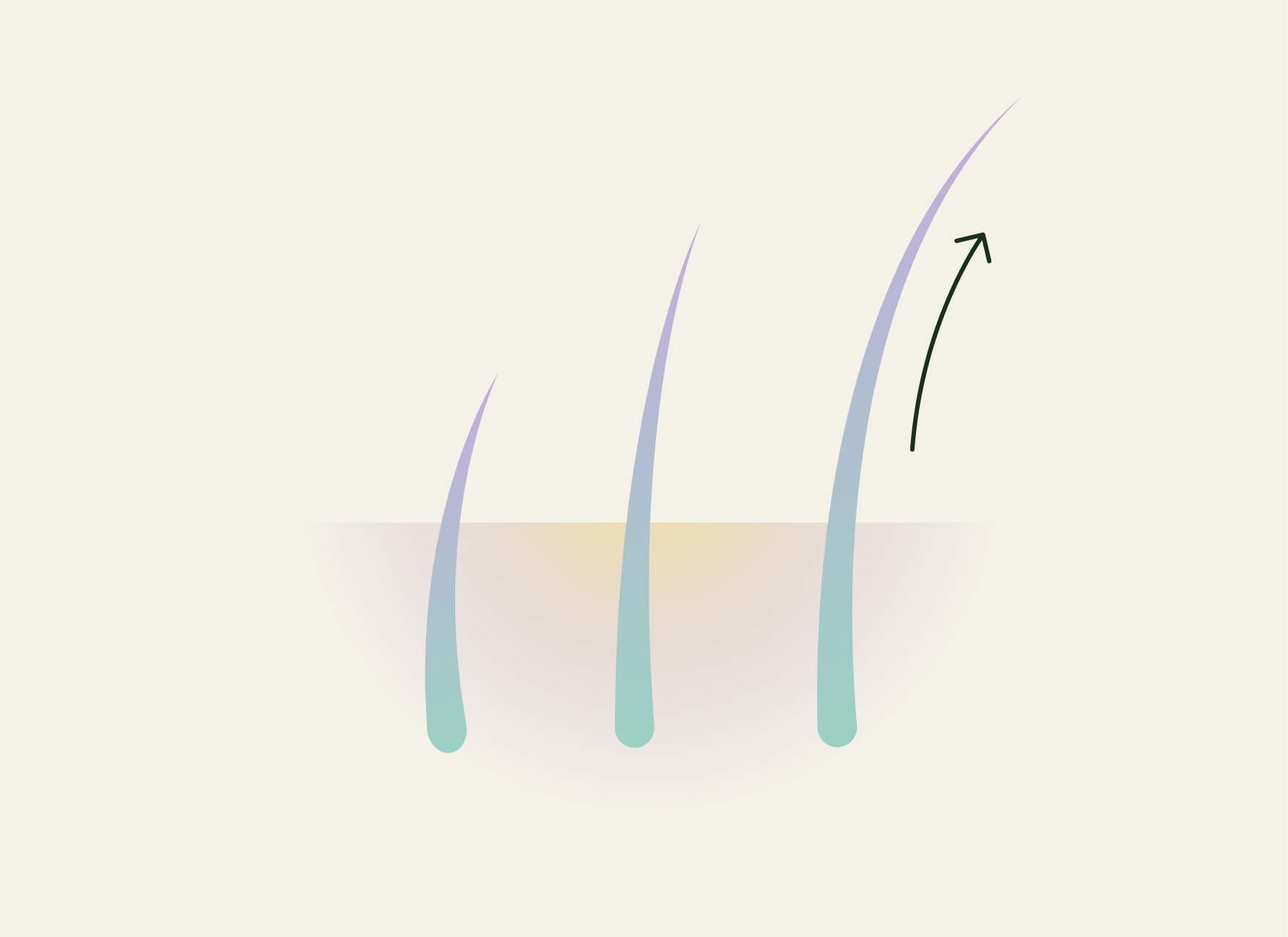
Oestrogen supports the anagen phase of the hair growth cycle: the active growth phase during which follicles produce hair. When oestrogen declines, this phase shortens. Hair grows for less time before entering the resting and shedding phases. The result is reduced density, finer strands, and often a change in texture.
The androgen-to-oestrogen ratio also shifts during the menopausal transition. As oestrogen falls, androgens (which were previously balanced against it) become relatively more prominent. Hair follicles are oestrogen-sensitive, and this shift can contribute to female pattern hair loss: diffuse thinning most noticeable at the crown and central parting, distinct from the receding hairline pattern associated with male pattern hair loss.
A 2025 review published in Maturitas confirmed that the menopause transition is associated with decreased hair density, reduced calibre, and changes in texture through these hormonal mechanisms. The evidence for the androgen contribution is real but less definitively established in women than in men, so "research suggests" is the accurate framing.
One clinically relevant detail: not all HRT formulations are equivalent for hair. Transdermal oestrogens e.g. patches, spray or gel, is preferred over oral as they provide a more steady flow of oestrogen through the skin, unlike oral formulations which can peak and trough as the body digests and metabolises them, thus triggering more hair fall. Progestogens with lower androgenic activity, such as micronised progesterone, may be preferable for women who are particularly concerned about hair thinning. This is worth discussing with a specialist when considering which HRT formulation is right for you.
Weight, shape, and why your body feels unfamiliar
Oestrogen influences where the body stores fat. Before menopause, it directs fat storage predominantly toward the hips and thighs. When oestrogen declines, this regulatory influence weakens, and fat storage shifts toward the abdomen. This is not a matter of eating more or moving less. It is a direct metabolic consequence of hormonal change.
Many women describe this not so much as "weight gain" but as a different body: the same number on the scale but their shape, where their body carries weight, how their clothes fit, or how they see themselves in the mirror can feel different.
The Zochling et al. qualitative study (2025) described this experience as the body becoming unfamiliar, which resonates more closely to what many women actually experience than the clinical term “fat redistribution.”
There is no lifestyle intervention that reverses the hormonal mechanism driving this change. Exercise and dietary patterns remain important for overall health and may support body composition to a degree, but they do not address the underlying hormonal cause. What they can do is meaningfully support how you feel in your body, particularly regular movement, which has evidence for improving body image in midlife women independent of weight change, as well as support long term health such as reducing cardiovascular disease and improving cognition and bone health.
The finding that changes everything: it is not about how you look
This is the piece that most articles on this topic miss entirely, and it matters more than anything else in this brief.
A cross-sectional study of over 350 perimenopausal and postmenopausal women published in Maturitas (2017) found that feelings of unattractiveness were associated with depressed mood, poor memory, and unsatisfactory sexual relationships. Not with age. Not with BMI. Not with any objective measure of physical appearance.
The women who felt most unattractive were not the women who had changed the most physically. They were the women whose mood was lowest, whose cognitive function was most disrupted, and whose intimate relationships were most affected.
This reframes the problem entirely. If feelings of unattractiveness were driven primarily by physical changes, the logical response would be to try to change how you look. But if they are driven by mood, cognitive function, and sexual relationship quality, the logical response is to address those things. Which are precisely the things that effective menopause treatment addresses.
83% of Voy members receiving menopause treatment reported improvement in mood and emotional symptoms (presented at The Menopause Society 2025, forthcoming in Climacteric). 73% reported improvement in brain fog.
The distance you feel from yourself is most likely not a problem with your appearance. It is a problem with hormonal disruption to the systems that govern how you experience yourself from the inside.
Sexual confidence and intimacy: the part nobody talks about
None of the top-ranking articles on this keyword address this, and yet it sits at the centre of many women's experience of feeling unattractive during menopause.
“Vaginal dryness and discomfort are direct consequences of declining oestrogen's effect on vaginal tissue. They affect how women feel about their bodies in intimate contexts and can create a cycle in which avoidance of intimacy compounds the sense of disconnect and diminishment.”
Libido also declines during the menopausal transition, driven by both oestrogen and testosterone changes. Research reviewed in Frontiers in Public Health (2026) found that body image concerns, sexual life satisfaction, and self-esteem are significantly and interactively related across menopausal stages. They are not separate problems. They feed each other.
Vaginal oestrogen, a topical treatment that helps restore vaginal tissue thickness, elasticity, and hydration, can make intimate life more comfortable and is suitable for many women including some who cannot take systemic HRT. Testosterone may help with libido and sexual desire in perimenopausal and postmenopausal women, though individual responses vary and it is worth discussing with a specialist what is right for your situation.
The cultural layer: why menopause coincides with becoming invisible
It would not be honest to discuss feeling unattractive during menopause without acknowledging the cultural pressure that sits alongside the hormonal one.
Western culture has a youth-centred beauty ideal, and menopausal women are both underrepresented in media and, when they do appear, more likely to be invisible than celebrated. The Zochling et al. 2025 qualitative study described how women in midlife felt their bodies were being measured against a standard they could no longer meet, and that this measurement was largely external rather than internal.
Social media compounds this. Constant exposure to curated, filtered imagery disproportionately represents younger women and narrower beauty ideals. Research on digital media's effect on self-attractiveness during menopause, reviewed in the Frontiers in Public Health 2026 paper, confirms that this exposure is not neutral.
This is not an invitation to stop using social media or to somehow transcend cultural conditioning by thinking about it differently. It is an acknowledgement that the pressure you feel is real, it is structural, and it sits on top of everything else that is already hard. That is worth naming.
What genuinely helps
The evidence suggests a tiered approach: treating the hormonal causes first, then supporting the psychological and practical dimensions alongside.
Address the hormonal picture
HRT is the most direct intervention for the physical changes underlying this experience. Research suggests it may partially restore skin collagen and elasticity, reduce the vasomotor symptoms that disrupt sleep and mood, and address the hormonal fluctuation that drives the low mood correlated with feelings of unattractiveness. If HRT concerns you, our dedicated article on HRT risks and benefits covers the current evidence in full.
For libido and energy, testosterone may help, though individual responses vary and a testosterone blood test within the last three months is required before a prescription can be issued.
For vaginal changes and intimate discomfort, vaginal oestrogen is highly effective and suitable for many women who cannot take systemic HRT. It can be used lifelong, alone or alongside systemic HRT, and provides additional benefits such as reduced urinary symptoms and recurrent urinary tract infections.
CBT and structured psychological support
CBT is NICE-recommended for menopause-related mood symptoms and sleep disruption. It also has evidence for body image distress specifically: a 2024 narrative review in Maturitas found that positive body image interventions, including CBT and self-compassion approaches, show meaningful benefit in midlife women. Voy offers structured CBT as part of its comprehensive menopause care.
Movement
Regular physical activity has meaningful evidence for improving body image in midlife women, independent of changes to weight or body composition. This is not about changing how you look. It is about changing your relationship to your body through what it can do rather than what it looks like.
A brief signpost
If low mood, loss of confidence, or negative feelings about your body are significantly affecting your daily life, it is worth discussing this with a specialist. These can be symptoms of depression as well as menopause, and both deserve proper care.
Feeling like yourself again
"I feel truly looked after." That is Donna, a Voy member.
"Very personal, very about me." That is Claire, another Voy member.
93% of Voy members reported improvement in overall quality of life after starting treatment (presented at The Menopause Society 2025, forthcoming in Climacteric). What that looks like in practice varies: for some women it is sleep. For some it is mood. For some it is stepping back into intimacy. For some it is simply recognising themselves again when they look in the mirror.
The experience of feeling unattractive during menopause is not a vanity problem. It is not a mindset problem. It is a hormonal problem with hormonal solutions, supported by psychological and lifestyle approaches that work best when the underlying picture is being addressed.
Voy's menopause consultations are 45 minutes with BMS-trained (British Menopause Society) specialists. That is enough time to hold the whole picture: skin, hair, mood, libido, body image, and what is actually driving the distance you feel from yourself. Not treated as separate concerns, but as the connected experience they are.